If you're buying or renting a pre-owned home in Japan, check whether it was built under the current seismic standards or the older "Kyu-taishin 旧耐震: Former Seismic Standards." Japanese law sets earthquake-resistance rules for houses, condos, and other buildings to help reduce damage. These standards affect both safety and market value, making it essential to review them in advance. Now, you may be wondering what distinguishes the old standards from the new ones. This guide will clarify seismic performance (Taishin-seinou 耐震性能) and explain how to assess it.
- What is a home built under the Former Seismic Standards?
- The difference between the former and current standards - What to know about housing constructed under the Former Seismic Standards
Apartments and Condominiums Built Under the Former Standards
Detached Houses Built Under the Former Standards - Making the most of the benefits when buying an older home
- Check the seismic performance before you buy - Ensure seismic performance with a Seismic Standards Compliance Certificate
1. What is a home built under the Former Seismic Standards?
Japan's Building Standards Act (Kenchiku Kijun-hou建築基準法) sets requirements for a building's earthquake resistance. Following a revision in 1981, the seismic requirements are commonly divided into the former standards (Old Seismic Standards: Kyu-taishin 旧耐震) and current standards (New Seismic Standards: Shin-taishin 新耐震). A later revision introduced the "2000 Seismic Standards," which means that housing may have different requirements based on its construction date. Generally, a home is considered to have been built under the old standards if it received building confirmation before June 1, 1981.
The difference between the former and current standards
The difference between the former and current seismic design standards lies in the criteria used to measure earthquake resistance. The current standards include requirements absent from the former ones, mandating a higher level of seismic performance. For instance, while the former standards lacked specific provisions regarding building collapse during a major earthquake, the current standards explicitly require that structures must not collapse—a measure intended to protect human life. Because these criteria have become more stringent, housing built under the former standards is often considered to have inferior seismic performance, which can lead to a lower valuation of such properties.
2. What to know about housing constructed under the Former Seismic Standards
If you are considering buying or renting a home built under the former standards, there are several points to keep in mind. These include potential risks related to the property's value and ongoing maintenance. Key considerations include:
Apartments and Condominiums Built Under the Former Standards
- Buyers may have difficulty obtaining the home or investment loan due to concerns about seismic performance.
- Owners may find it harder to sell because the building is classified as having been built under the former standards.
- Funding for seismic retrofits may be needed, resulting in higher monthly contributions to the building’s repair reserve fund (Shuzen-tsumitate-kin修繕積立金).
- If the reserve fund cannot cover future retrofit costs, owners may face a substantial one-time special assessment.
- When considering the reconstruction of a building due to aging or insufficient seismic resistance, reaching agreement among all unit owners and other rights holders can be difficult and may delay the process.
- If an employee plans to rent the property as company housing, the employer may prohibit a corporate lease if its policy excludes buildings constructed under the former standards.
Detached Houses Built Under the Former Standards
- Buyers may have difficulty obtaining a home or investment loan because of concerns about seismic performance.
*In many cases, financing may be based primarily on the appraised value of the land.
- Potential seismic retrofit costs may make the property harder to sell.
- The building and its systems may be more prone to age-related deterioration and defects.
- Insulation and airtightness may be inadequate or may have deteriorated over time.
- If an employee plans to rent the property as company housing, the employer may prohibit a corporate lease if its policy excludes buildings constructed under the former standards.
3. Making the most of the benefits when buying an older home
Although resale homes built under the former standards may be valued lower, this can create opportunities for buyers. They are often considerably less expensive than newly built homes and may be available in desirable locations, such as near train stations. Many also offer greater flexibility for renovation.
Check the seismic performance before you buy
Not every building from the former-standards period has poor durability; some properties may perform well in earthquakes. For example, homes built using the 2×4 (platform framing) method are often considered structurally resistant to earthquakes, and some may meet current seismic standards.
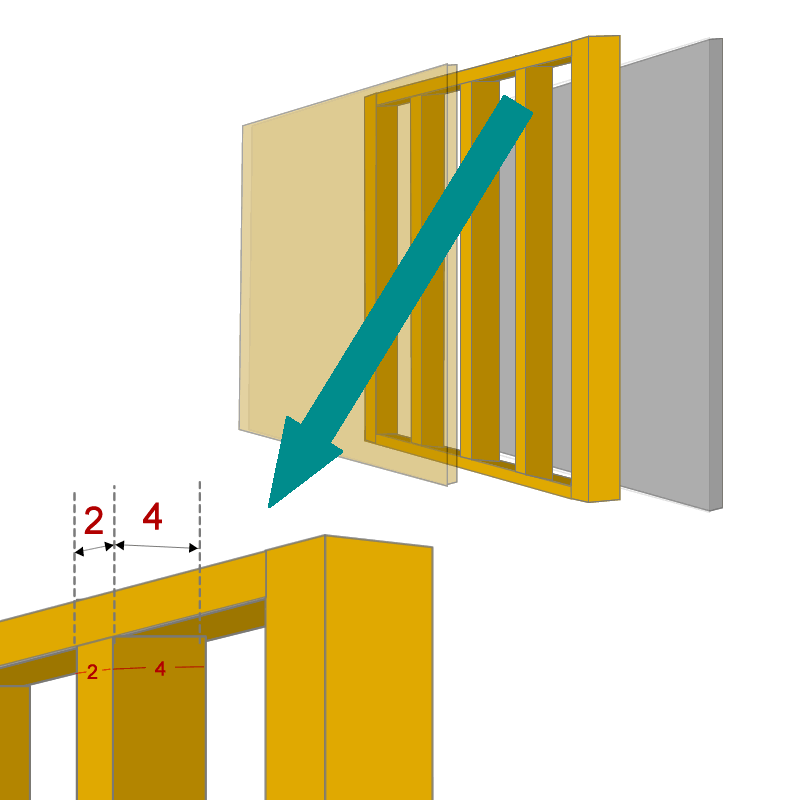
2×4 Frame wall construction method (Two by Four Wakugumi-kabe Kouhou枠組壁工法)
This method uses lumber, such as 2-by-4-inch pieces, to create a frame, then joins it with structural panels to form the building’s structure.
4. Ensure seismic performance with a Seismic Standards Compliance Certificate
If you are considering buying a home built under the former standards, make arrangements for a seismic assessment to obtain a Seismic Standards Compliance Certificate (Taishin-kijun Tekigou-shoumeisho 耐震基準適合証明書). Lenders tend to refuse to finance a home built under the former standards, but a certificate may improve your chances of loan approval. It may also help buyers qualify for benefits such as the mortgage tax deduction, reductions in real estate acquisition tax, and discounts on earthquake insurance premiums. If the assessment identifies inadequate seismic performance, you can factor the cost of retrofits and ongoing maintenance into your decision, helping you manage risk.
You can arrange a seismic assessment for the certificate through a real estate company. If you need assistance, we can connect you with architects via our English-language seismic assessment service. Please feel free to reach out to us for more information.
Related article
Quake-proof capability of housing in Japan
https://rise-corp.tokyo/ja/pages/quake-proof-capability-of-housing-in-japan