Starting in April 2026, Japan introduced the "Blue Ticket" (青切符) system for bicycles and similar vehicles. While the traffic rules remain the same, enforcement has become stricter. In Japan, bicycles are classified as vehicles, meaning that cyclists must follow the same traffic laws as drivers. Violating these rules can result in penalties. This guide outlines essential regulations, explains the Blue Ticket system, and provides important information for cycling in Japan.
1. Blue Tickets Issued for Bicycle Violations
2. What Happens If You Do Not Pay a Blue Ticket?
Serious Violations: “Red Tickets”
3. Common Violations Subject to Blue Tickets
-Using a mobile phone while riding
- Wearing earphones while riding
- Running a red light
- Failure to make a two-stage right turn
- - How to go through a scramble intersection
- Riding on the right side of the road
- Ignoring a stop sign
- Riding a bicycle without proper brakes
- Riding without a bicycle light at night
- Dangerous riding on sidewalks
- - When Sidewalk Riding Is Permitted
4. Other Important Rules for Cyclists in Japan
- Bicycle registration (Anti-theft Registration)
- Bicycle liability insurance
- Helmet use is a mandatory effort obligation
- Mopeds differ from bicycles
- Electric kick scooters are classified as bicycles
1. Blue Tickets Issued for Bicycle Violations
A “Blue Ticket” is a type of Traffic Penalty Notification. Police give this blue slip for dangerous or intentional traffic violations, and you’ll need to pay a fine if you receive one. The system used to apply to cars and motorcycles, but now bicycle violations are included and enforced more strictly. The Blue Ticket system applies to anyone 16 years old or older, and fines usually range from 3,000 JPY to 12,000 JPY, depending on the severity of the violation.
2. What Happens If You Do Not Pay a Blue Ticket?
The Blue Ticket system is introduced to simplify handling traffic violations. If you pay the fine on time, your case will be closed, and you will not have to go to court. However, if you don’t pay the fine, your case will go to criminal court. This could give you a criminal record, which may seriously affect matters such as permanent residency applications. For anyone planning a long-term stay in Japan, it is crucial to take Blue Tickets seriously.
Serious Violations: "Red Tickets"
For very dangerous offenses such as drunk or reckless driving, offenders receive a "Red Ticket" (Criminal Traffic Citation 赤切符). These cases go to court, and a guilty verdict means a criminal record.
3. Common Violations Subject to Blue Tickets
Blue Tickets may be issued when a cyclist ignores police warnings or instructions. There are 113 defined violations, and below are some of the most common ones that cyclists may unknowingly commit:
Using a mobile phone while riding
Talking on the phone or looking at the screen while holding it.
Fine: 12,000 JPY
Wearing earphones while riding
Listening at a volume that prevents hearing surrounding sounds
Fine: 5,000 JPY
Running a red light
Fine: 6,000 JPY
Failure to make a two-stage right turn
Turning right in the same way as a car at intersections is illegal.
Fine: 3,000 JPY. At signalized intersections, this may also count as running a red light (6,000 JPY)
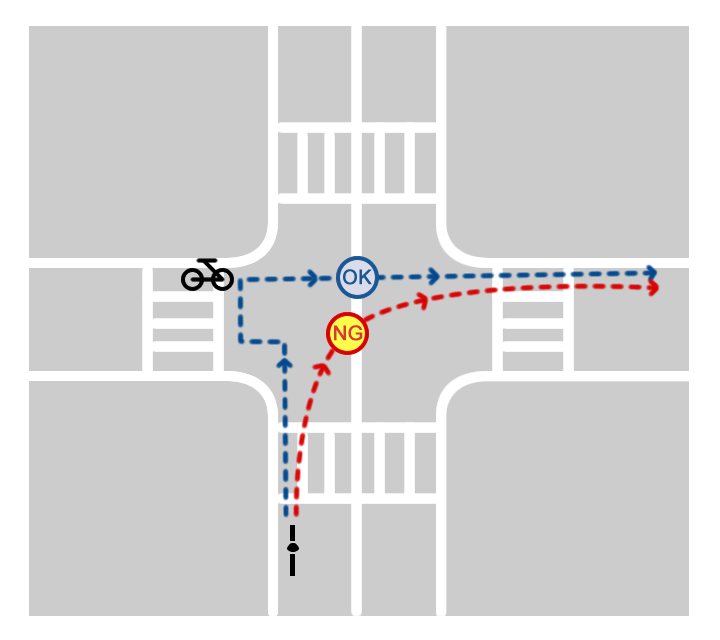
How to go through a scramble intersection
Generally, cyclists should use a two-stage right turn at scramble intersections. But if you follow pedestrian lights and use the crosswalk, you can cross without doing a two-stage turn, as long as you don’t get in the way of pedestrians. For safety, it’s best to get off your bike and walk there.
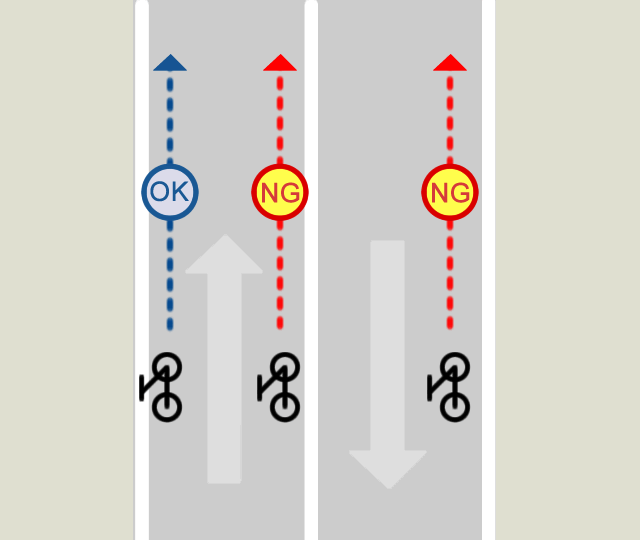
Riding on the right side of the road
Japan follows left-hand traffic. Riding on the right side is considered going the wrong way.
Fine: 6,000 JPY
Ignoring a stop sign
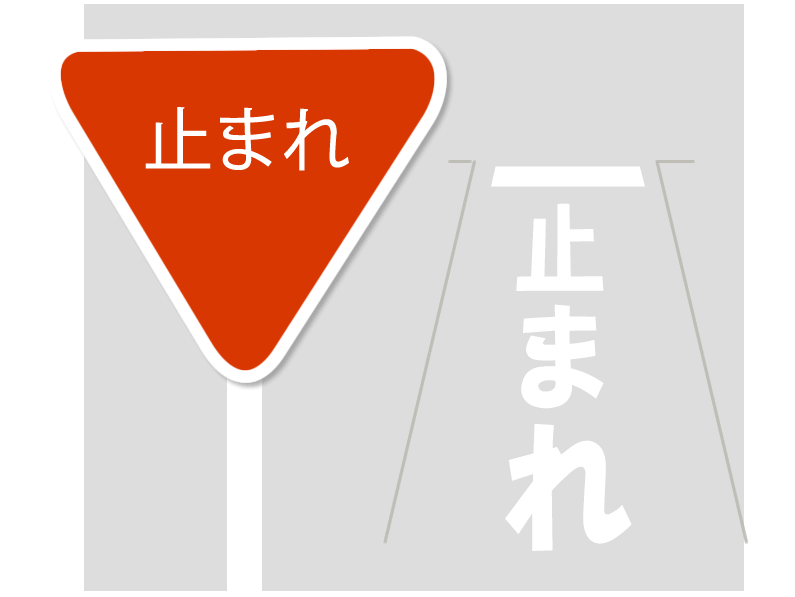
Failing to stop at a Stop (止まれ) sign
Fine: 5,000 JPY
Riding a bicycle without proper brakes
Bicycles must have both front and rear brakes
Fixed-gear bikes without brakes are not allowed on public roads
Fine: 5,000 JPY
Riding without a bicycle light at night
Required from dusk to nighttime
Fine: 5,000 JPY
Dangerous riding on sidewalks
Riding at high speed or ignoring police warnings to leave the sidewalk
Fine: 6,000 JPY
When Sidewalk Riding Is Permitted
- Children under 13 and adults aged 70+
- When roadway conditions are unsafe (construction, heavy traffic, narrow roads, parked cars, etc.)
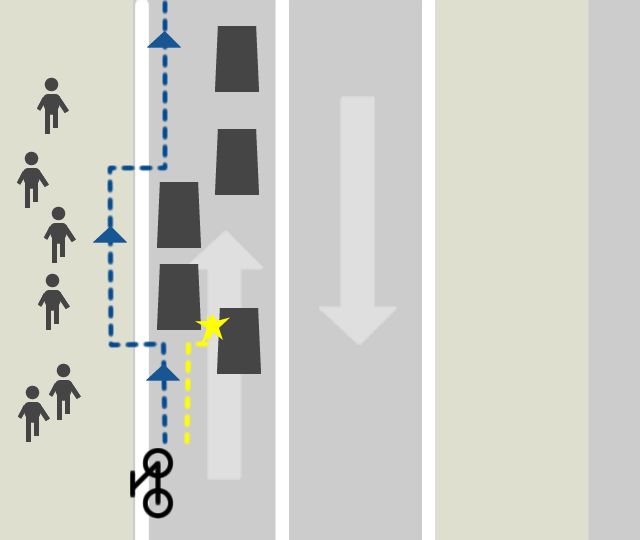
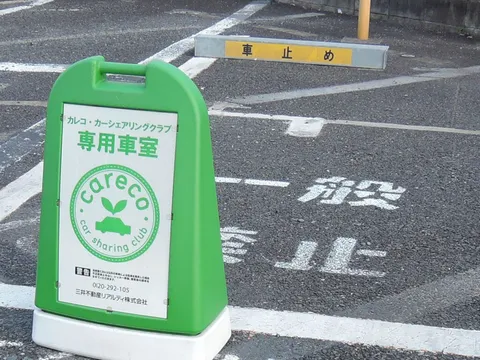
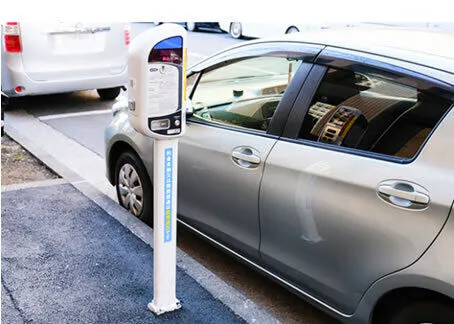
For example, if you have to avoid a parked car on the roadside and it is unsafe to drive on the road, you are allowed to go on the sidewalk. In such "unavoidable" situations, using the sidewalk is permitted. Also, on the sidewalk with a sign permitting bicycles, you can cycle regardless of the circumstances. In these situations, cyclists should ride slowly and stay on the sidewalk closest to the road.
Note: Illegal roadside parking by cars is itself a traffic violation, subject to Blue Ticket penalties.
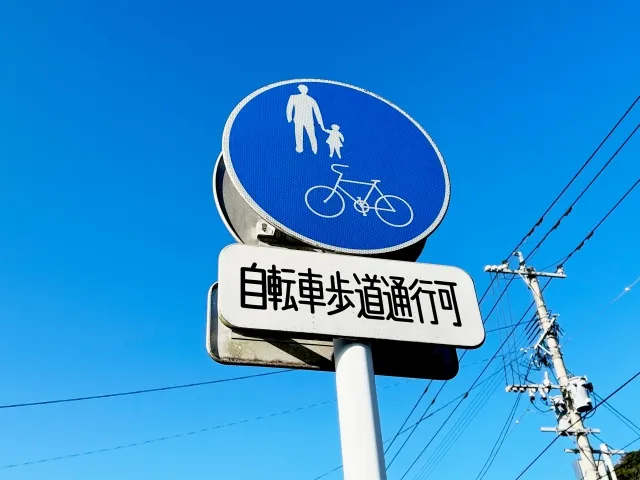
Bicycle permitted sign
4. Other Important Rules for Cyclists in Japan
Bicycle registration (Anti-theft Registration 防犯登録)
Bicycle registration connects your information with your bicycle’s serial number in a police database. You must register your bicycle when you buy it from a shop. Although there is no direct penalty for failing to register, an unregistered bicycle may be treated as stolen due to a lack of proof of ownership.
For bicycles imported from abroad or bought online, registration can be completed at police stations or authorized locations such as home centers and bicycle shops. The registration fee ranges from 600 JPY to 800 JPY, and the validity is 10 years. Your identification is required when applying. If you get a used bicycle, the previous registration must be canceled before registering it in your name.
Bicycle liability insurance
In Tokyo, cyclists are expected to have bicycle liability insurance (自転車損害賠償保険). There’s no penalty if you don’t, but it’s still considered mandatory. This requirement reflects the rising number of bicycle accidents, some of which result in compensation claims of tens of millions of yen. You can buy insurance online or at bicycle shops. The annual premium will be between 2,000 and 3,000 JPY.
Helmet use is a mandatory effort obligation
Everyone is strongly encouraged to wear a helmet when cycling, no matter their age. There’s no penalty for not wearing one, but it’s highly recommended for safety, especially for kids, commuters, and sports cyclists.
Mopeds differ from bicycles
Mopeds, which are motorized bikes with pedals, are considered motor vehicles (原付バイク) in Japan. Unlike electric-assist bikes, mopeds can run only on motor power. To ride on a moped on public roads, you must follow the rules that include: holding a motorized-bicycle license (原付一種免許証), wearing a helmet, displaying a license plate, and carrying mandatory insurance. Mopeds are not allowed on sidewalks under any circumstances.
Electric kick scooters are classified as bicycles
Electric kick scooters are considered “specified small motorized bicycles” in Japan, as they’re limited to 20 km/h or less. Anyone 16 years old or older can use them without a driver’s license. Some electric kick scooters have a low-speed mode (6 km/h or less), allowing you to use them on sidewalks when unavoidable. If you do, you must ride slowly and be ready to stop at any time. As more people use electric kick scooters, accidents are becoming more common. Always follow traffic rules and ride carefully for safety.